- Great News Day
- Posts
- The teen who stopped his e-bike for a stranger
The teen who stopped his e-bike for a stranger
Good morning, friend.
Today's issue leans on a quiet truth we keep re-learning: the world runs on people who choose to stop. A teenager on an e-bike. A dispatcher on the phone. A principal who ran the numbers in three seconds. You'll meet all of them below, and one of the biggest cancer breakthroughs in decades. Let's begin.
🌱 TODAY'S MINDSET
The small yes
The moments that end up shaping a life are almost never the big ones. They are the small yeses. A stranger asks the time. A neighbor asks for a jump. A kid asks if you'll toss the ball back. The whole day pivots on a two-second answer, and most of us give it without noticing we did.
Here is the thing about the small yes. It costs almost nothing on your end. It can rewrite the entire afternoon on the other end. And you do not have to be brave to give one. You just have to be paying enough attention to notice you were asked.
Most of us go through the day rehearsing the big yeses we might be called to. The heroic ones. The ones that end up on the news. Meanwhile, the ordinary asks float past. The stranger in the parking lot. The coworker who says "quick question" and hopes it really is. The neighbor's kid at your door with a fundraiser envelope.
You will notice, if you look for it today, that the small yeses are almost always low-stakes for you and surprisingly high-stakes for the other person. That is not a coincidence. That is how the world quietly holds itself together.
So here is the invitation. Today, say yes to one small ask. Not a heroic one. A tiny one. The kind you might have rushed past yesterday. See what shifts. Watch what you get back that you did not expect.
You will find that a life full of small yeses is quietly the good life.
⭐ TODAY'S BRIGHT LEAD
The teen who stopped his e-bike for a stranger
Royal Cothrun, honored by the Town of Gilbert. Credit: Hoodline
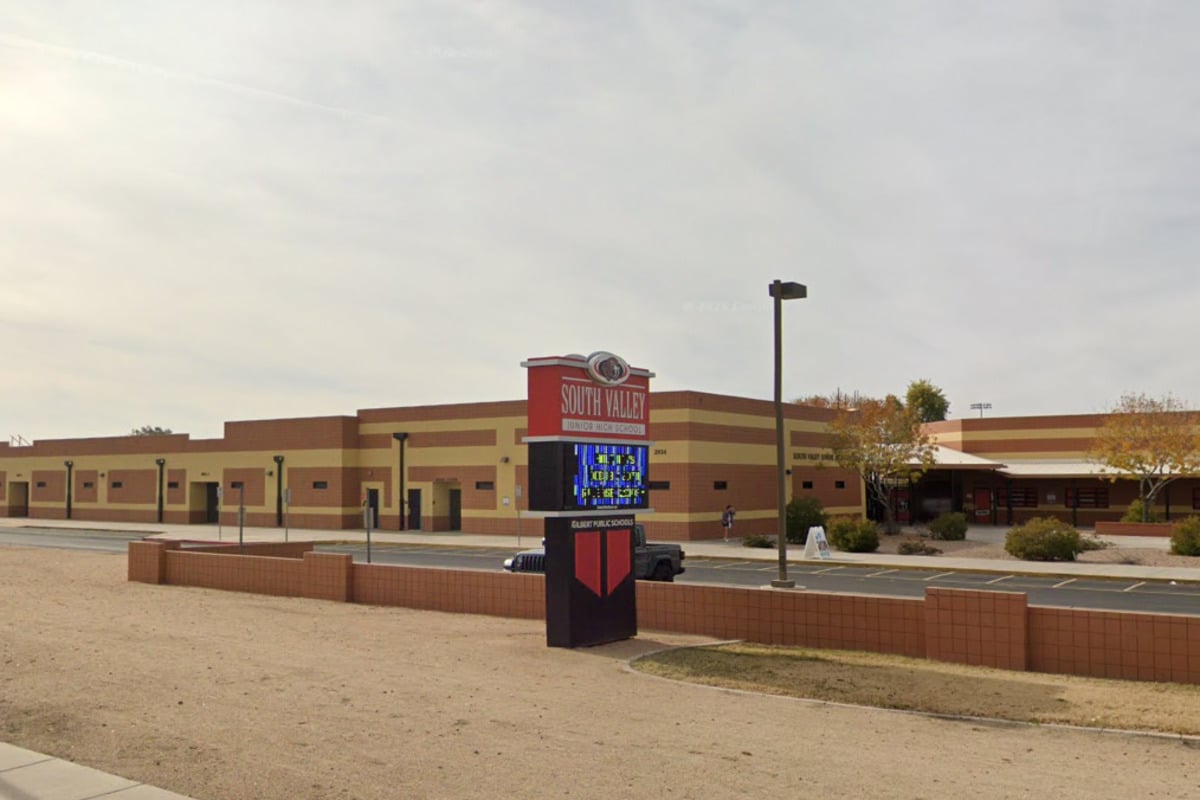
Royal Cothrun was 14, out for a ride near South Valley Junior High in Gilbert, Arizona. It was 103 degrees. And there, walking alone on the sidewalk, was a 75 year old woman who did not look right.
Her name was Teresa Morgan. She had recently been diagnosed with dementia, and she had gotten lost trying to walk home from the grocery store. Royal stopped. He offered to help. He guided her into the shade. He pulled up directions on his phone. When it became clear she needed more than directions, he coaxed her son's phone number out of her memory and called him from the sidewalk.
The whole encounter was captured on the smart glasses Royal happened to be wearing. That is how the town of Gilbert ended up seeing exactly what one 14 year old did, in the heat, for a stranger he had never met.
Last month, the Gilbert Town Council presented Royal with the Citizen Hero Award and, in a lovely small-town flourish, a key to the town. Fire and Rescue Chief Rob Duggan told the room that Royal "absolutely saved the life" of the woman he stopped for. ABC News picked up the story next, on its America Strong segment, and just like that, one quiet decision on one hot afternoon rippled all the way across the country.
Here is what we keep coming back to. Royal had no training. No badge. No script. He just noticed something was wrong, and he stopped. That is the whole thing. He stopped.
Read the full story at Hoodline
🌍 MORE GOOD TODAY
The dispatcher who delivered a baby by phone
Michael V. has been a Tampa Fire Rescue dispatcher for ten years. This week, for the first time in his career, he talked a family through delivering a baby at home, over the phone, before any rescue crew reached the door. The father did the catching. The grandmother helped tend to mom. Michael did the coaching. By the time Rescue 19-B pulled up, mother and baby were already being cared for and the crew was there to help, not to lead. Dispatchers are the first responder most people never see. This week, one of them added a Tampa baby boy to his story.
Source: Hoodline / Tampa Fire Rescue 🇺🇸
Australia's quolls have joeys again, for the first time in 60 years
The eastern quoll is a small, spotted marsupial that once padded through half of eastern Australia. It vanished from the mainland roughly 60 years ago. This week, conservationists confirmed that captive-bred quolls released in a fenced sanctuary have not only survived, they are breeding. One female was found with six joeys tucked into her pouch. Six little pinkies, each one about the size of a jellybean, each one a species inching back toward home. Conservation wins can take decades to show up. This one just did.
Source: Times of India / Mongabay 🇦🇺
Nine days underground, and two men said okay
Sanjay Shah and Kabir Mahajan spent nine days trapped 170 meters inside a hydropower tunnel in Nepal. Rescuers used drone mapping, satellite imagery, controlled blasts and hand tools to inch a person-sized passage through the debris. On the morning of September 4, a crew called into the darkness. A faint voice called back. "Hunncha," it said, which in Nepali means "okay." Both men were brought out alive. The Australian engineer helping to coordinate the effort called it one of the great rescues of the 21st century, and said it will rewrite the textbooks on how tunnel rescues are done.
Source: ThePrint / Nepal Army 🇳🇵
🔬 SCIENCE OF JOY
Pancreatic cancer just got its biggest breakthrough in decades
On August 26, the FDA approved Rasonque (daraxonrasib) for metastatic pancreatic cancer, the most common and one of the deadliest forms of the disease. It is a once daily pill. It targets a family of proteins called RAS that quietly drive most pancreatic tumors. And in the Phase 3 trial that got it approved, patients who took it lived a median of 13.2 months, compared with 6.7 months on standard chemotherapy alone. That is roughly double.
Anton Bilchik, a surgical oncologist at Providence Saint John's Cancer Institute in Santa Monica, called it "probably the most exciting study that has been reported in pancreas cancer in the last 30, 40 years, if not forever." The FDA cleared it more than six months ahead of its review deadline.
It is one drug. It is not a cure. But for a disease where every extra month has felt out of reach, extra months just arrived, with fewer side effects than the chemotherapy it replaces. Somewhere today, a family got called back with news that is finally, quietly, better.
💛 BRIGHT FIND
A note from the editor
This spot is open, and we're picky about it. If your product or cause is the sort of thing a Great News Day reader would genuinely be glad to hear about, hit reply and tell us. We only place things here that we would recommend to a friend.
✨ ONE MORE SMILE
A retired FDNY battalion chief named John Ricketts spent the last five years quietly making 78 handmade, to-scale models of the Twin Towers. Each one encases a piece of rusted steel he pulled from the pile at Ground Zero. He has given 65 of them away already, mostly to fellow first responders and to the families of those who did not come home. Thirteen more are on his workbench, waiting to be finished before Christmas. This week, as the country prepares to mark 25 years, he is still building.
Some people carry the day forward by remembering out loud. Some carry it forward with their hands.
We'll see you tomorrow. Say the small yes today, friend.
With sunshine,
The Great News Day team
Reply