- Great News Day
- Posts
- Great News Day: October 9, 2026
Great News Day: October 9, 2026
In partnership with

Silver Miners Have Outrun Silver Since 2020

Since March 2020, silver has returned about 402%. The silver miners returned 445%.
That gap is the leverage our research team focuses on. When silver rises, a producer's net asset value can rise much faster, and share prices tend to follow. It works in both directions, and a mine is only as good as the company running it.
The Ultimate Silver Playbook shows how the team separates the miners worth owning from the rest, and which silver stocks are on its watchlist now. It's free.
Good morning. Today's issue has an oyster that nobody expected to see again, a river snail that nobody expected to see again, a 0 and 4 football team that nobody expected to see again, and a Chicago lab doing something strange and new to five cancers at once. We'll start with a small reminder about things that come back.
🌱 Today's Mindset
Things find their way back
If you had stood at the edge of Point Reyes in 1870 and watched the oysters coming in by the ton, and someone had told you that in a century those beds would be gone almost entirely, you would not have believed them. If you had stood at the same spot in 1990, looking at the empty mud, and someone had told you that the oysters would come back, you would not have believed that either. Both predictions turned out to be wrong, in opposite directions, at opposite times.
Here is the quieter version of the same lesson, available to all of us without a boat or a pipette. A lot of what we quietly file under "gone" is actually just resting. Or waiting. Or working its way back by a route we were not watching. The friend you lost touch with because the group chat moved on. The hobby you set down one busy fall and never picked up. The version of your own curiosity that got buried under three years of logistics. A song that stopped meaning anything to you, that will mean everything again on some Tuesday you cannot see from here.
We tend to treat absence as a verdict. Most of the time it is only an interval. People you thought you lost will surface again. Interests you thought you outgrew will knock on the window. The quiet mornings you forgot you were allowed to have are waiting at the end of a weekend you do not yet have on the calendar.
The practice today is small. Pick one thing you had quietly written off. A person, a plan, a place, a part of yourself. Put it back in the maybe column for a day. You do not have to call anyone. You do not have to buy a ticket. You just have to notice that the door is not actually locked. A great many of them never were.
Everything in this issue is a thing that came back. Enjoy.
⭐ Today's Bright Lead
The Gold Rush took California's native oyster. Last week, 125,000 of them went home.
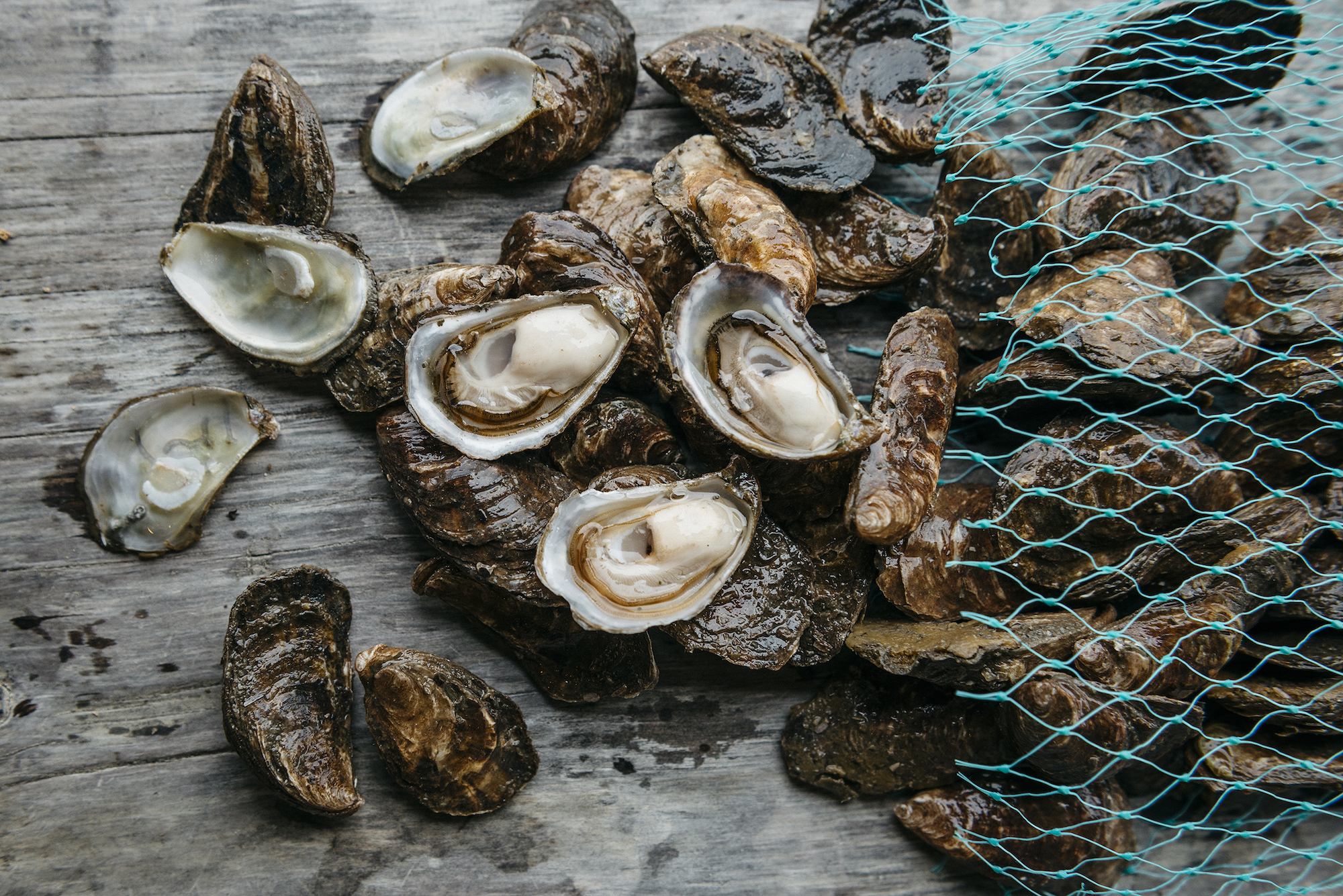
Photo via The Nature Conservancy.
California used to have oysters the way California used to have redwoods. Before the Gold Rush, Olympia oysters carpeted the state's protected bays by the mile. Then came a century of over harvest, dredging, pollution, and new neighbors from other coasts. Today the native Olympia sits at roughly one percent of its historic numbers in California waters. It is, officially, a species of concern.
A team from UC Davis's Bodega Marine Laboratory and The Nature Conservancy decided they had waited long enough. In June, biologists lowered 125,000 lab raised Olympia oysters into the mud at Sacramento Landing, a tucked away corner of Point Reyes National Seashore. It is the first permanent "wild site" outplanting of the species in California. The reef, if it takes, will be the first baby Olympia reef in Point Reyes since before the forty niners.
The quiet magic of this project is what oysters do once they settle in. "Once it gets going, they actually create habitat for lots and lots of other species," said Chela Zabin, a Davis research scientist on the project. "We've found sturgeon, salmon and shorebirds among the oyster beds." One restored oyster is a small thing. One restored oyster reef is a small city.
The researchers will not know for a few years whether the colony is self sustaining. But the oysters are back on the shoreline this morning, filtering the water they live in, inviting the rest of the neighborhood to move in. California has waited 170 years for this reef. It can wait a little longer.
Source: UC Davis, "Restoring California's Native Oyster"
🌍 More Good Today
A river snail thought extinct showed up alive and breeding, 700 kilometers upstream
In Walgett, in northern New South Wales, Aboriginal rangers were doing a routine survey of a weir on the Barwon River this week and found a colony of about 50 live Darling River snails. The species had not been recorded in the region in more than 30 years, and it had been feared gone. More remarkable still, the snails had quietly colonized a human made irrigation structure, suggesting that the right pieces of engineered habitat can carry them home. A dedicated breeding facility already holds 4,000 more. "It's a glimmer of hope that you can actually create habitats and add flow, and you'll get some of these species back," said Charles Sturt University's Professor Martin Mallen Cooper. (Australia)
0 and 4 Idaho beat the No. 1 team in the country with one second on the clock
The University of Idaho's football team walked into Tuesday night winless. Montana State walked in defending national champion, 5 and 0, riding a 19 game win streak, ranked first in the country. With 13 minutes left Idaho was down two touchdowns. With one second left they scored a 25 yard touchdown, lined up for the two point try, and converted it. Final: 35 to 34, Idaho. It is the first time the Vandals have ever beaten the top ranked team in the nation. Half the student section was crying. The other half was running toward the field. (United States)
Source: The Argonaut, University of Idaho
The paper crane a stranger folded for her at age 7 held a secret she did not find for a decade
When Rika Matsuda was 7, she crashed her bike in Japan. A man in a suit stopped, bandaged her up, and sat with her until she calmed down. To settle her, he taught her origami and sent her home with a paper crane. Rika kept it on her shelf. Ten years later, in high school, a class assignment finally prompted her to carefully unfold it. Written in tiny Japanese on the inside, a message she had carried around unknowingly for a decade: "We should treasure each time we cross paths with someone, because it might never happen again." The man had quietly written it while she was on the phone with her grandfather. He did not say a word about it. He just folded it in. (Japan)
🔬 Science of Joy
A new "off the shelf" cancer vaccine shrank tumors in five different cancers at once
Cancer vaccines have been the long awaited next chapter of oncology for years. One of the holdups: most of them have had to be built custom for the patient, a slow and expensive process. On Monday, a team at the University of Chicago, publishing in Nature Biomedical Engineering, unveiled something different. They call it MOF Vac. It is a modular, "off the shelf" vaccine platform designed to carry essentially any cancer antigen you give it, along with the immune signals needed to wake the body up.
In mouse models of five different cancers (melanoma, colorectal, triple negative breast, lung, and oropharyngeal), the platform induced tumor regression and the kind of immune memory that could, in principle, keep a cancer from coming back. Pair it with radiotherapy, the authors report, and the response reached distant, untreated tumors as well.
This is a mouse study, not a cure, and the road from a journal to a clinic is long. But every so often you watch a group of researchers describe one platform that handles five cancers from one shelf, and you understand that the chapter is actually turning.
Source: Nature Biomedical Engineering
💛 Bright Find
Reader resource. Not sponsored.
This spot is open, and we're picky about it. We only run things we would genuinely want you to try. If you make something you think a Great News Day reader would love, a product, a book, a tool, a cause, hit reply and tell us about it. Keep it human. Keep it good. We'll take a look.
✨ One More Smile
A couple of months ago, 26 year old Denise Lopez stopped for gas in Corpus Christi, Texas, and started chatting with Mary Grant, who was 88 and in line in front of her. They became friends. Denise made a few TikTok videos about their unlikely duo. Then strangers took it from there. Packages have been showing up at Mary's door every week ever since, from as far away as the Netherlands. Flowers. Cards. A sweater. A stuffed bear taller than she is.
"You would hear these stories on television or in a magazine, and you'd never think it would happen to you," Mary told the local news this week. "But it did. It's unbelievable actually."
May your Friday carry a small return of something you'd forgotten was coming.
With warmth,
The Great News Day team
Reply