- Great News Day
- Posts
- Great News Day: November 23, 2026
Great News Day: November 23, 2026
Plus Louisiana's best whooping crane year on record, a UK rewilding project that turned a farm into a jungle, and a lizard that finally went home after 30 years.
In partnership with

How can AI power your income?

Ready to transform artificial intelligence from a buzzword into your personal revenue generator
HubSpot’s groundbreaking guide "200+ AI-Powered Income Ideas" is your gateway to financial innovation in the digital age.
Inside you'll discover:
A curated collection of 200+ profitable opportunities spanning content creation, e-commerce, gaming, and emerging digital markets—each vetted for real-world potential
Step-by-step implementation guides designed for beginners, making AI accessible regardless of your technical background
Cutting-edge strategies aligned with current market trends, ensuring your ventures stay ahead of the curve
Download your guide today and unlock a future where artificial intelligence powers your success. Your next income stream is waiting.
Good morning, friend. Today's issue is about the quiet, patient kind of good. The things that look like nothing is happening, right up until they're obviously happening. A Kansas City man who decided the comment section didn't have to be the way it is. A bird we almost lost. A fish we did lose, nearly. And a cancer drug that just changed what gets to be possible. Pull up a chair.
🌱 Today's Mindset
The Gifts You Leave Without Knowing
You will never know most of the good you do.
A kind sentence you typed a year ago, half a thought really, is still saved on somebody's phone. The person you waved to at the crosswalk had just gotten bad news and needed one face that wasn't in a hurry. The tip you left at the diner covered the last pack of diapers. You don't get a receipt for any of it. Nobody writes back. The feedback loop you keep hoping for doesn't exist, and that is actually the good news, because it means you can stop performing the act and just do it.
The internet has trained us into a different rhythm. Post something, count the hearts, feel a little buzz, do it again. Kindness online now has a scoreboard, and when the scoreboard is quiet we start to wonder if we should bother. Most people have quietly stopped bothering. The comment section got a lot meaner once we all forgot that an encouraging note, left for a stranger with no expectation of a reply, is a complete act in itself.
Here is what you can trust instead: every small, warm thing you put into the world lands somewhere. Not always where you aimed it. Sometimes it lands years later. Sometimes the person you helped becomes the person who helps three other people, and you never meet any of them. Call it compounding, call it ripples, call it whatever makes it feel real. Just know that it is happening whether or not you see it happen.
So today, leave something nice in a place where nobody can trace it back to you. A comment under a stranger's video. A note tucked into a library book. An extra buck in the tip jar. A smile at the barista who has been on her feet since five. You will walk away. The thing you left will keep going.
⭐ Today's Bright Lead
A Kansas City man built a mob. The kind that fights back with kindness.
🇺🇸 Kansas City, Missouri
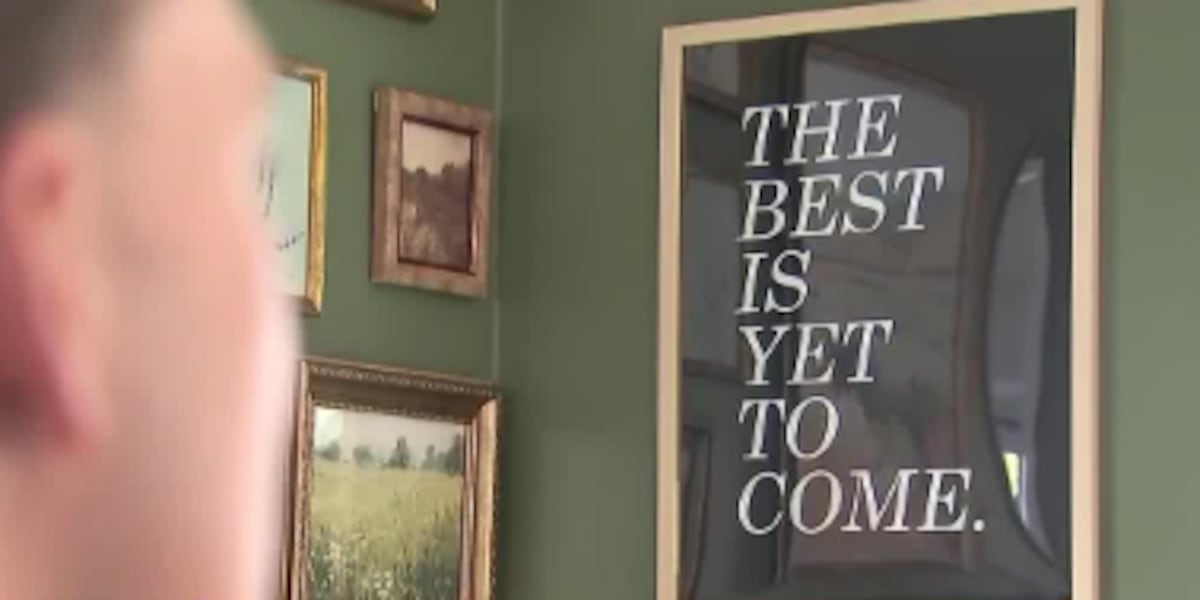
Image: KCTV5 News
Tyler Brickley kept scrolling past the same thing. Someone would post a video, feel brave for a second, and then a line of strangers would arrive to tell them why they shouldn't have. He wondered what would happen if the strangers showed up on the other side.
On January 1, 2023, he started a group he called The Kindness Mob. His goal, modest and slightly embarrassed, was to get ten people to join him. Today the group has thousands of volunteers, and every single day it picks one creator who has been piled on and quietly floods their comments with encouragement. Hundreds of messages. Sometimes thousands. The volunteers don't sign their names. They just leave the warmth and go.
One recent target was a young man named Parker, whose video had sat with no views and no comments. Then his phone started buzzing and wouldn't stop. The notes were not generic. People told him their own stories, their own hard chapters, their own reasons his video mattered. "They're not just saying something kind," Parker told KCTV5. "These are people who are actually telling me their own life experiences." He said the hardest part was realizing he wasn't alone.
The group's motto is as simple as the math: kindness for everyone, always. Brickley started with a question. Thousands of people answered it by showing up. The algorithm is still the algorithm, and the comment section is still mostly what it is. But in one corner of it, a mob is forming that nobody has to run from.
Read the full story at KCTV5 →
🌍 More Good Today
Louisiana's whooping cranes just had their best year on record
🇺🇸 Baton Rouge, Louisiana
The whooping crane is the rarest of the world's fifteen crane species. In 2011, Louisiana started the slow work of bringing them back. In 2016 they had their first wild chick in more than 75 years. This year they fledged ten, the most of any whooping crane reintroduction program ever. The state's wild population is now 84 birds, with eighteen nesting pairs hatching eggs this season. "For that many to successfully incubate and hatch at least one chick was wonderful to see," biologist Sara Zimorski told WBRZ. It took fifteen years of patience to get to this sentence. WBRZ →
Five years of letting a place be wild, and the numbers came back wild too
🇬🇧 Isle of Wight, United Kingdom
The Hampshire & Isle of Wight Wildlife Trust just released five years of rewilding data from the island, and the results are the kind of thing you want to read twice. Bird numbers have almost tripled. Butterflies are up 117%. Bumblebees up 64%. Moth species diversity up 70%. Earthworms, unsung heroes of any functioning soil, up 66%. Twenty new bird species and nine new butterfly species have shown up on their own. Fourteen of the bird species are on the UK's Red List for conservation concern. The land they returned to was former farmland. Nature did not need a manual. It just needed a little room. Hampshire & IoW Wildlife Trust →
A lizard the length of your forearm just went home for the first time since 1997
🇳🇿 Aotea / Great Barrier Island, New Zealand
Eleven niho taniwha, also called chevron skinks, were released this week onto Aotea / Great Barrier Island. These are New Zealand's longest lizards, almost a foot from nose to tail, and they live on only two islands in the entire world. Between 1997 and 1999, three injured skinks were taken off the island for care at Auckland Zoo. They reproduced. Thirty years later, the zoo had a family of twenty-one, and Ngāti Rehua-Ngātiwai ki Aotea, the local iwi, finally got to welcome their taonga home. The release honors a long-held cultural aspiration to reconnect the species to the island of origin. Sometimes homecoming takes three decades. Sometimes it's worth it. NZ Department of Conservation →
🔬 Science of Joy
Head and neck cancer got its first new treatment in seven years
🇺🇸 New Haven, Connecticut
On November 5, the FDA granted accelerated approval to a drug called amivantamab for HPV-unrelated head and neck cancer. It is the first new treatment for this disease in seven years, and the clinical trial behind it was led at Yale School of Medicine.
Here is the comparison that matters. The previous standard of care for these patients produced a response rate of about 24%, with average survival under nine months. Amivantamab, tested in a cohort of 102 patients who had already been through chemotherapy and immunotherapy, produced a response rate of 42% and a median survival of 12.5 months. Patients receive it as a subcutaneous injection rather than a long IV, with mild side effects.
"It looks like the most active single agent that we have for head and neck cancer," Dr. Barbara Burtness, who led the trial, told Yale Medicine. In combination with immunotherapy and chemotherapy, the response rate goes higher still. A whole category of people just got a better day ahead of them. Yale School of Medicine →
💛 Bright Find
Sponsored slot · Available
This spot is open, and we're picky about it. If you have a product, a service, or a cause that belongs in front of readers who choose warm over snarky to start their morning, come say hi.
Reply to this email with what you're up to. We read every one.
✨ One More Smile
A juvenile grey seal named Monsoon was found on a beach in Waxham, England, in October, with a plastic flying ring embedded in her neck. The RSPCA's East Winch Wildlife Centre took her in. She weighed 39 kilograms. She needed a lot of care. She also, apparently, needed a pool.
Six weeks of swimming and healing later, the staff loaded Monsoon into a van, drove her to a quiet stretch of Norfolk coast, and opened the door.
She looked at the sea for a second. Then she went.
That's our day. Leave something nice where nobody can trace it back to you. See you tomorrow.
With sunshine,
The Great News Day team
Got a lead? Reply and tell us. The best stories come from readers.
Reply